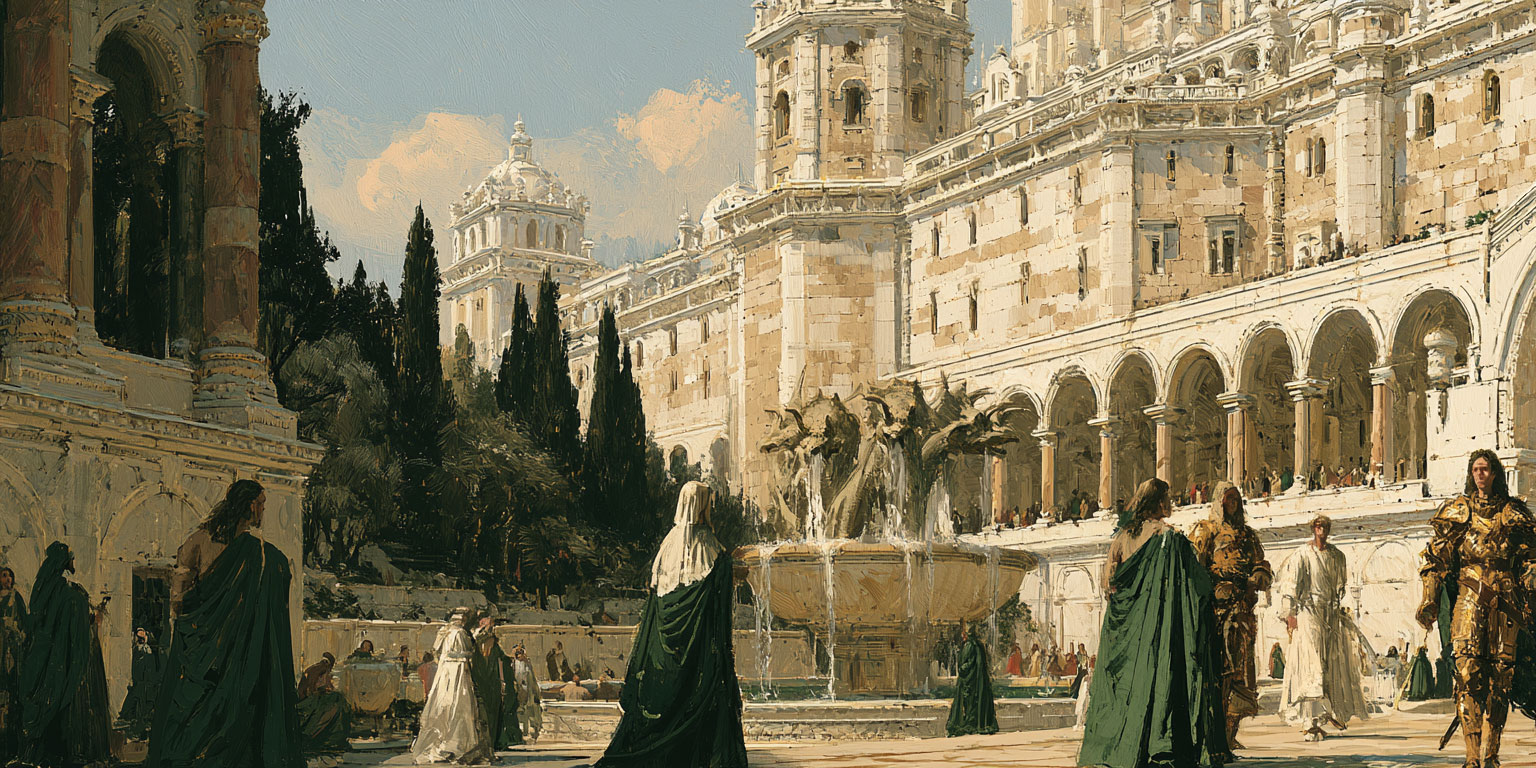
The Mother’s Children Barracks stands at the far end of one of the City Tier’s great boulevards, a vast pale-stone complex of courtyards, arcades, dormitories, refectories and training halls. From the street it looks almost monastic, though the constant movement of clerics, volunteers, guards, petitioners and residents gives it the energy of a small town.
It is one of the Church’s great practical institutions: part convent, part barracks, part hostel, part recovery house, part training academy.
Those housed here include rank-and-file Defenders of the Mother clerics, lay believers in Church service, volunteers between assignments, people recovering from addiction or hardship, pilgrims with nowhere else to stay, and anyone whom the Church considers safer under its roof than outside it. Some remain for a night. Others stay for years.
Food, clothing, basic medical care and accommodation are all provided without charge. In return, almost everyone able to work contributes something: kitchen duty, cleaning, clerical work, tending gardens, assisting healers, repairing equipment or supporting the Defenders.
The arrangement is charitable, but not entirely without discipline.
Life inside is structured around bells, meals, prayer, assigned duties and curfews. Residents are expected to keep communal spaces orderly, avoid drunkenness and violence, and respect the authority of senior clergy. Those fleeing addiction or criminal lives often find the routine either stabilising or suffocating, depending on whom one asks.
The Barracks Proper
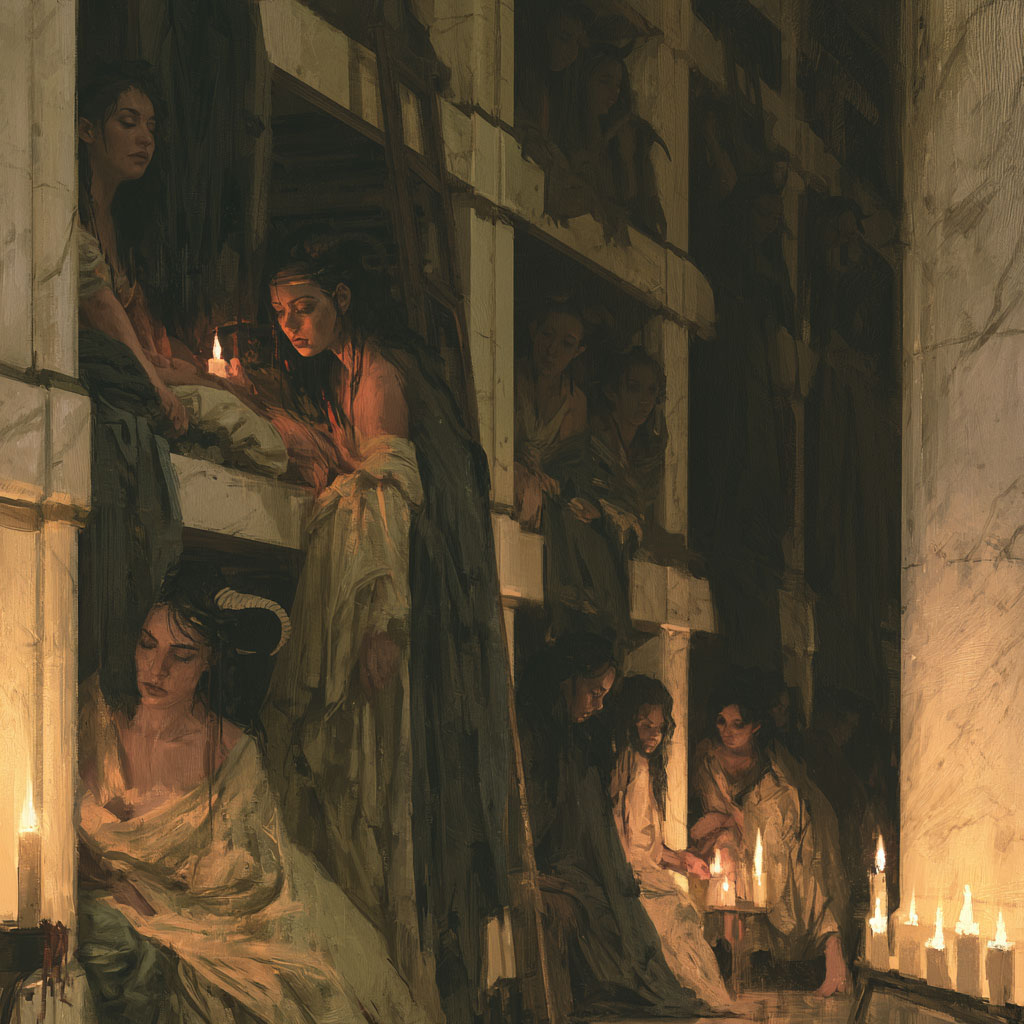 The largest wings contain rows of simple dormitories. Most are communal, with stacked narrow bed recesses, storage chests and heavy curtains that provide a little privacy.
Clerics and long-term residents are usually housed by function rather than wealth or background, one of the few places in Aranthaes where a former street addict may sleep only a few beds away from the younger child of a respectable City family serving a devotional year.
Senior clerics and officers have small private chambers overlooking internal courtyards.
The three operational heads of the Defenders of the Mother – Orlonas Dasir, Vyvaen Weller and Thaelema Arkannis – maintain permanent quarters here, allowing them to move quickly between administration, training and deployment.
Defender Training Yards
Behind the central buildings lie several enclosed yards where Defenders drill daily.
Training is practical rather than ceremonial: shield formations, weapon practice, arrest techniques, crowd control, protection of clerics, evacuation drills and fighting inside confined streets and buildings.
New recruits quickly learn that protecting the Mother rarely means standing beautifully beneath a temple arch.
Armouries
The lower floors contain heavily secured armouries holding weapons, shields, protective equipment and emergency supplies.
Most equipment is functional rather than ornate: spears, swords, crossbows, mail, shields, helmets, medical packs, lanterns and restraint equipment.
A smaller secure armoury contains specialised equipment reserved for unusual threats, senior Defenders and sanctioned Church operations. Access is tightly recorded.
The Great Refectory
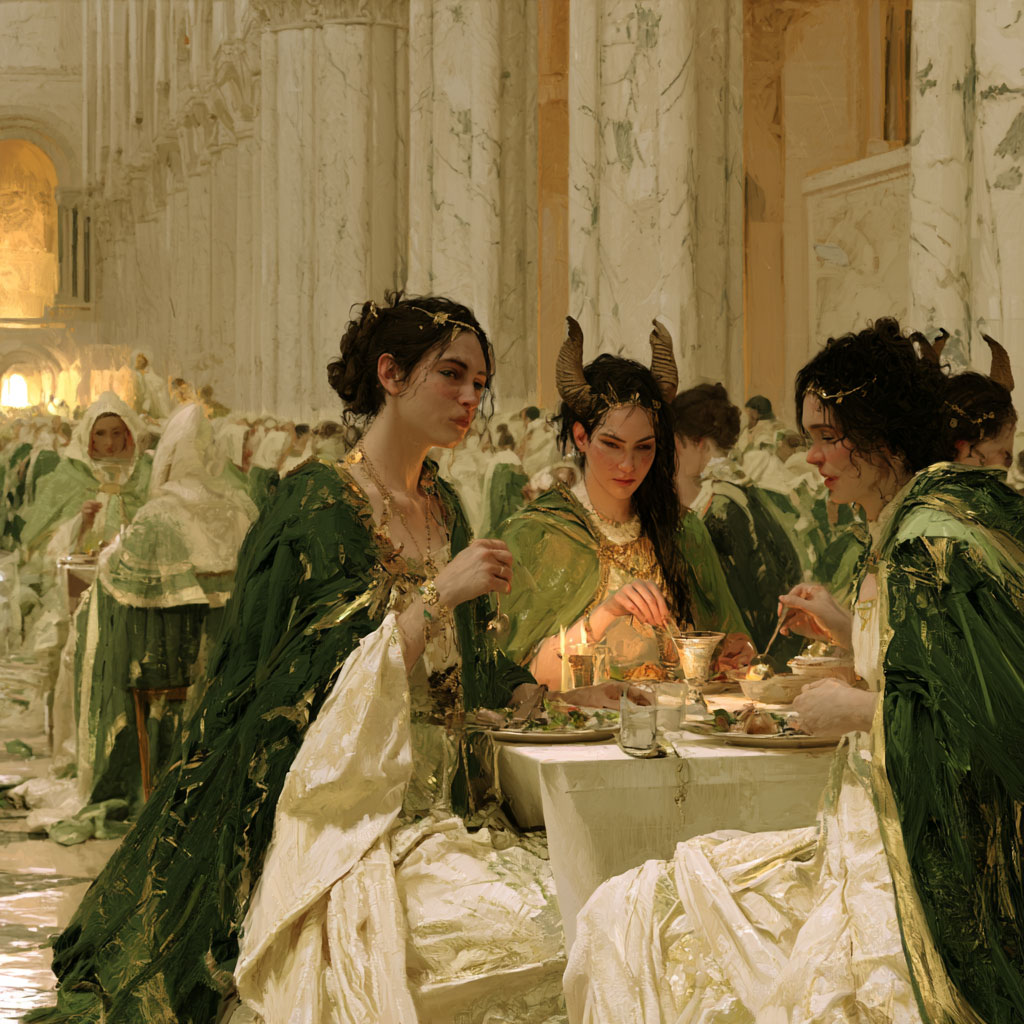 Several hundred people can eat at once in the enormous vaulted refectory.
Meals are plain, plentiful and deliberately communal: bread, stew, vegetables, fish, cheese, fruit and whatever has arrived through Church donations or the Steward of the Basket.
High-ranking visitors eat the same food as everyone else unless formally entertaining guests.
For some residents, this is simply dinner, while for others, it is the first time in years that they have known with certainty where their next meal will come from.
Recovery & Sanctuary Wings
One quieter section of the complex houses those recovering from addiction, violence, exploitation or severe hardship.
The Church does not treat these residents as prisoners, though movement may be restricted when someone is considered vulnerable or dangerous to themselves or others. Healers, clerics and experienced volunteers work there continuously.
Success stories are common enough that many former residents later become volunteers themselves.
Library & Instruction Halls
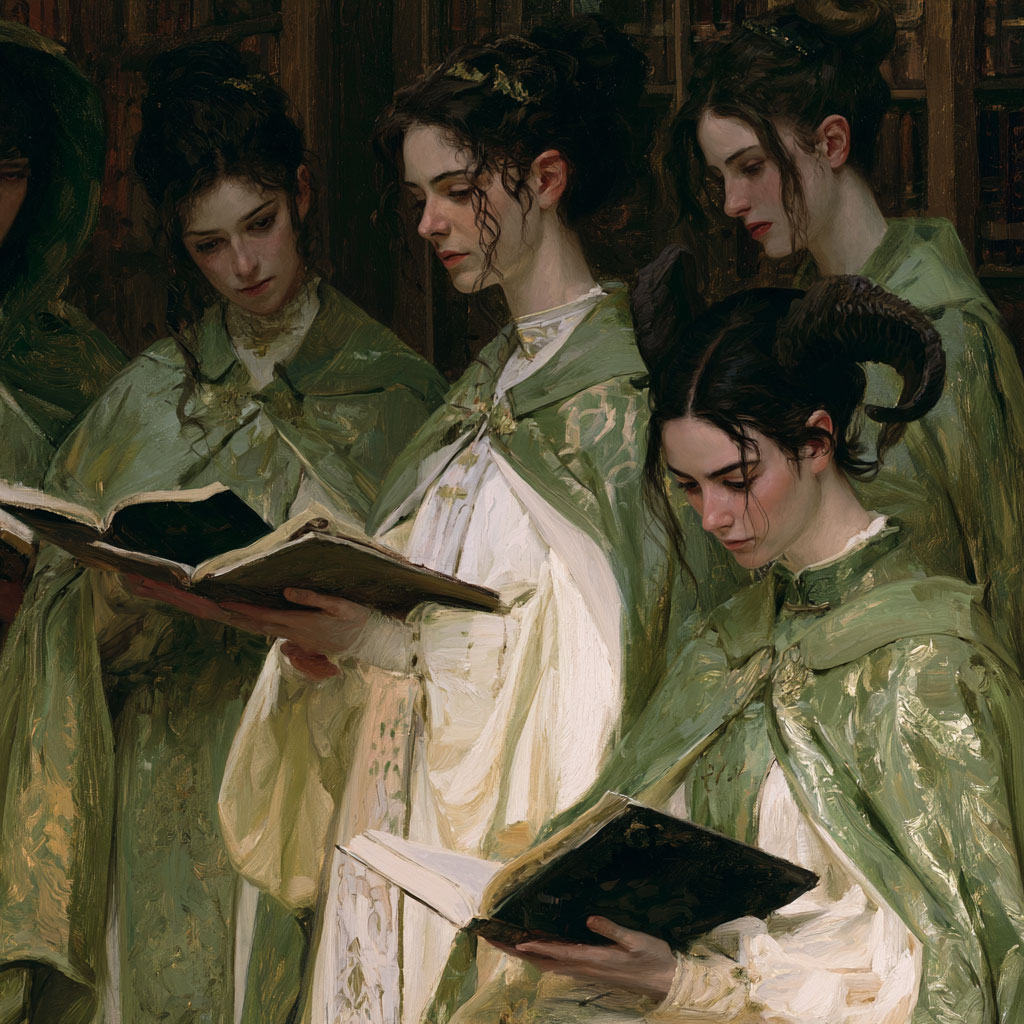 The Barracks maintains a substantial working library containing theology, law, medicine, languages, history, military manuals and practical texts.
Unlike the High Temple libraries, access is relatively broad. Clerics teach reading, writing and basic arithmetic alongside religious instruction, and many poor Aranthaens first become literate here.
For ambitious residents, the library can become a route upward through Church service. For adventurers, it is also one of the easiest places in the city to obtain access to obscure but practical knowledge without needing wealthy patrons.
The Unspoken Purpose
Officially, the Mother’s Children Barracks exists to serve believers and those in need. And it does. But its location serves another purpose too.
By placing accommodation, training, administration, charity and ordinary devotional life in the City Tier, the Church quietly ensures that the enormous High Temple complex above is not overwhelmed by thousands of believers seeking beds, food, instruction, work and access to clergy.
The High Temple remains radiant, ceremonial and controlled, while the Barracks handles the messy business of actually caring for everyone.
Access & Admission
The Mother’s Children Barracks is not generally open to casual visitors. Most adventurers will never pass beyond the outer courts unless they have specific business with the Church.
Those seeking to join the Defenders of the Mother may be admitted for assessment and training, while the hungry, destitute or vulnerable will rarely be turned away from the charitable offices. Scholars with legitimate reason to research Lady Bune may also be granted supervised access to the working library.
Everyone else is expected to wait outside until summoned.
Men in particular are unlikely to be admitted beyond the public areas without clear purpose, invitation or sponsorship from senior clergy. Rank, wealth and noble birth carry surprisingly little weight here; the Barracks belongs to the Mother’s Children, and access is granted on the Church’s terms.